Credit-building cards: read the fee line before you apply

The cards listed here are for people with fair, poor or bad credit. They need no security deposit, but they carry annual fees and high APRs. Know what the first year costs, how the card is meant to be used, and what the issuer will ask you.

#1
Credit card

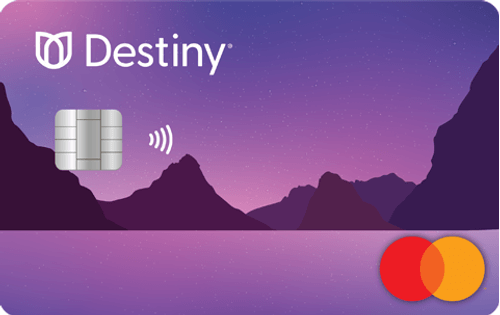
Destiny® Mastercard® with $1,000 Credit Limit

Best for A guaranteed $1,000 starting limit

Guaranteed $1,000 credit limit

  • Guaranteed $1,000 credit limit if approved
  • No security deposit required
  • Reports to all 3 credit bureaus
Annual fee
$250 the first year; $99 thereafter
Credit limit
$1,000
APR
35.9%
Monthly fee
$0 the first year (billed $0 each month); $231 annually thereafter (billed $19.25 each month)
#2
Credit card

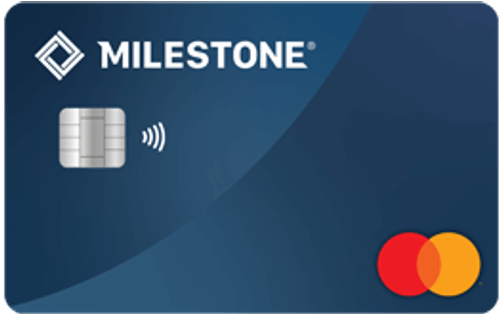
Milestone® Mastercard® - $1,000 Credit Limit

Best for A $1,000 unsecured line with no deposit

Unsecured line up to $1,000

  • Unsecured credit line up to $1,000
  • No security deposit required
  • Reports to all 3 credit bureaus
Annual fee
$250 the first year; $99 thereafter
Credit limit
Up to $1,000
APR
35.9%
Security deposit
None
Monthly fee
$0 the first year (billed $0 each month); $231 annually thereafter (billed $19.25 each month)

Reviewed November 2026How we write

Paid partner listings. BlazeBorrow may earn a fee when you click or sign up, which can affect order. How we earn

Before you ask

What to know first

  1. The fee can come out of your limit

    On many credit-building cards the first annual fee is billed when the account opens. A card with a $700 limit and a $175 fee would then start with $525 to spend.

  2. Plan to pay in full each month

    With APRs near 36 percent, carrying a balance is costly. These cards work best as a tool: one small charge a month, paid off by the due date, so on-time payments build up on your record.

  3. Where people trip: applying to all

    Each full application can put a hard inquiry on your credit report. Pick the one card that fits and apply once. Several applications in a row can lower your score.

See how long a balance takes to clear

Time to pay it off

What you borrowInterest, of what you repay
Total interest
Total paid

An estimate based on a fixed payment and rate. Your issuer sets the real APR, fees and minimum payment, so check your statement.

How to compare

Compare these cards in this order

Rewards catch the eye, but on a credit-building card they matter least. Go down this list from top to bottom. The card that wins the first two lines is usually the one to look at hardest.

  1. Annual fee, year one and after

    Look at both numbers. Some cards charge more the first year and less later. Others go the opposite way. If you plan to keep the card for two years, add both years together. That sum is the real price of holding the card.

  2. Credit limit

    A higher limit makes it easier to keep your balance small compared with the limit, which helps your score. Watch for the words up to. A limit of up to $1,000 means the issuer may give you less.

  3. APR

    If you pay the full statement balance by the due date every month, you usually pay no interest on purchases. If you think you will carry a balance some months, the APR becomes the most important number on the page.

  4. Rewards and extras

    Cash back is a small bonus, not a reason to spend. At 3 percent you earn $3 on $100 of gas or groceries. That is welcome, but interest on a carried balance can cancel it quickly. Check which purchases earn the higher tier.

Plain words

Terms worth knowing

Unsecured card
A credit card that needs no security deposit. The issuer takes on more risk, which is one reason fees and APRs are higher on cards for lower credit scores.
Annual fee
A yearly charge for having the card, used or not. It is billed to the card, so it counts against your limit until you pay it.
Grace period
The time between the statement date and the due date. Pay the full statement balance within it and purchases usually carry no interest.
Credit utilization
How much of your limit you are using. A $150 balance on a $1,000 limit is 15 percent. Lower is better for your score.
Statement balance
What you owed on the day the statement closed. Paying this amount, not the minimum, is what keeps interest away.

Questions

Questions about credit cards

What happens after I click a card?

You go to the issuer's own site. Some issuers let you check whether you may qualify first, using a soft inquiry that does not affect your score. A full application usually brings a hard inquiry. You will be asked for your name, address, income and Social Security number. The issuer then approves or declines and sets your limit.

What do I need to apply?

Your legal name, home address, date of birth, Social Security number and yearly income. Know your monthly housing payment too, since many applications ask for it. Use real figures. Issuers can ask for proof, and a wrong number can get an account closed later.

How do I use the card to build credit?

Put one small, regular bill on it, like a phone plan. Set up autopay for the full statement balance. Keep the balance well below the limit. Then leave it alone. A record of on-time payments over many months is what helps, not how much you spend.

When should I skip these cards?

If the annual fee would strain your budget, look at a secured card. You put down a refundable deposit, and many secured cards have low or no annual fees. Skip an unsecured card as well if you expect to carry a balance. At these APRs, debt grows fast.

What if I am declined?

The issuer must send you a notice with the main reasons and the credit bureau it used. You can then get a free copy of that report. Read it for errors, fix what you can, and wait a few months before you apply again. Applying somewhere else the same day rarely helps.